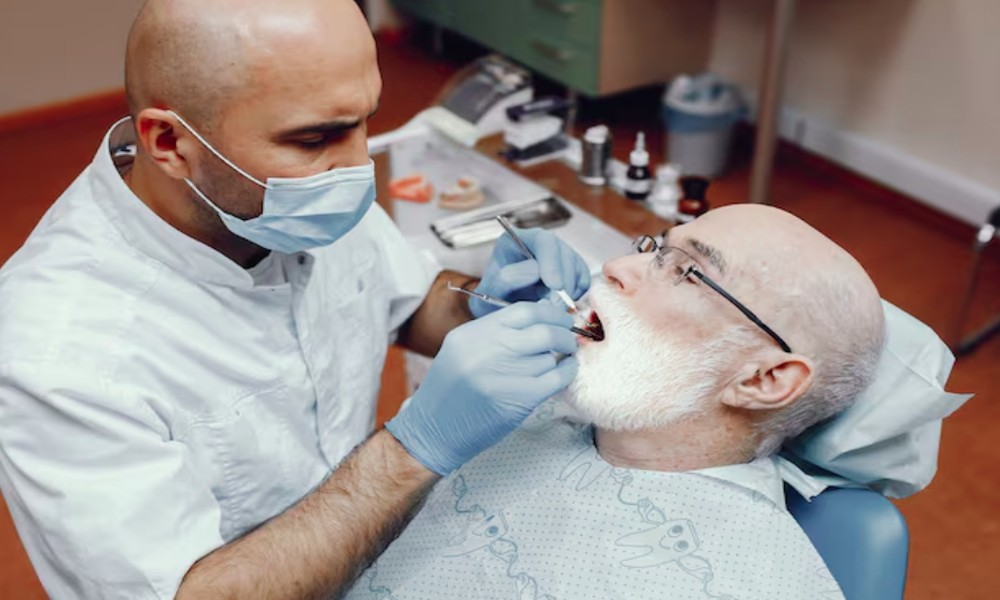


You have been told that a mouth ulcer or patch is cancer, or a biopsy is pending, and now you need to decide who should treat it. With so many types of specialists involved in cancer care, choosing an oral cancer doctor in India can feel confusing. This guide explains which specialist does what, which qualifications to look for, and what to ask before you commit to a treatment plan.
Which specialist treats oral cancer?
Oral cancer – cancer of the tongue, buccal mucosa (inner cheek), gums, floor of the mouth, lip or palate – is one of the commonest cancers in India, largely because of tobacco and areca-nut chewing. Several doctors may be involved in the journey:
- Dentist or oral medicine specialist: often the first to notice a suspicious ulcer or a red or white patch, and to refer for biopsy.
- ENT surgeon: may perform the biopsy and treat some early lesions.
- Head and neck surgical oncologist: a surgeon trained specifically in cancer surgery of the mouth, throat and neck. For most oral cancers, surgery is the primary treatment, so this is usually the lead doctor.
- Radiation oncologist: plans and delivers radiotherapy, often after surgery for larger tumours or node-positive disease.
- Medical oncologist: prescribes chemotherapy, targeted therapy or immunotherapy where needed.
- Plastic or reconstructive surgeon: rebuilds the jaw, tongue or cheek after removal; many surgical oncologists do this themselves.
- Speech and swallowing therapist, dietitian, dental oncologist: support recovery.
Because surgery is the mainstay for oral cancer, the first opinion ideally comes from a surgical oncologist with head and neck expertise, who can then coordinate the team.
Surgical oncologist vs general surgeon or ENT: does it matter?
Yes. Oral cancer surgery is not just about removing a lump. It involves achieving adequate margins, deciding whether and how extensively to clear the neck lymph nodes (neck dissection), preserving function wherever possible, and planning reconstruction in the same sitting. Surgeons who perform these operations regularly, within a cancer-focused setting, are better placed to make these decisions.
Qualifications to look for
Understanding the degrees helps you read a doctor’s profile:
| Degree | What it means |
|---|---|
| MBBS | Basic medical degree |
| MS (General Surgery) or MS (ENT) | Postgraduate surgical training |
| MCh (Surgical Oncology) | Super-speciality training in cancer surgery, usually three years after MS |
| DNB (Surgical Oncology) | Equivalent board qualification |
| Fellowship in Head and Neck Oncology | Additional focused training |
| MRCS or FRCS | UK surgical college membership or fellowship |
An MCh or DNB in surgical oncology, or a recognised head and neck fellowship, indicates formal cancer-surgery training. A surgeon’s profile page, such as this one, should list these degrees plainly, and you can verify registration on the National Medical Commission’s online register.
Qualifications are one input. Look also at how focused the surgeon’s practice is on head and neck cancers, and whether the hospital offers radiation and medical oncology on site or through a formal referral arrangement.
Why a multidisciplinary team matters
Good cancer centres discuss each case in a tumour board, where the surgical, radiation and medical oncologists, radiologist and pathologist agree on a plan together. This reduces the chance of over- or under-treatment. When you meet a doctor, ask whether your case will go through such a board.
Questions to ask at the first consultation
- What is the exact site, type and stage of my cancer, and which tests are still needed (CT, MRI, PET-CT, dental assessment)?
- Is surgery the recommended treatment? What will be removed, and will I need a neck dissection?
- Will reconstruction be needed, for example a free flap if the jaw or a large part of the tongue is involved, and who will do it?
- Will I need radiation or chemotherapy after surgery? Who will deliver it?
- How will speech, swallowing and appearance be affected, and what rehabilitation is available?
- What is the approximate cost, and is the hospital empanelled under my insurance or Ayushman Bharat?
Clear, patient answers are a good sign. Pressure to decide immediately, or vague replies about staging, are not.
Second opinions are normal
Oral cancer treatment is a major decision, and seeking a second opinion is not an insult to your doctor. It is particularly worthwhile if the first plan involves very extensive surgery, if surgery has been declined as “not possible”, or if the stage is unclear. Many surgeons now offer video consultations, so a patient in a smaller town can have reports reviewed by an oral cancer specialist in a metro city before travelling. Carry your biopsy report, slides or blocks, imaging, and a list of current medicines.
Where you are treated
Treatment in a smaller city is reasonable for early lesions if the surgeon has oncology training, but complex cases needing reconstruction or combined-modality therapy are usually better handled where all services are under one roof. Choosing an oral cancer doctor in India therefore involves weighing expertise, infrastructure, cost and distance from home, since follow-up continues for years.
Indicatively, surgery for early oral cancer costs around ₹1.5-4 lakh in private hospitals, and ₹5-12 lakh or more when reconstruction and adjuvant radiation are needed; government and scheme-empanelled centres charge far less. Figures vary widely by city and case, so take the estimate from the treating team.
Do not delay
Any mouth ulcer, patch or lump lasting more than three weeks, loosening teeth without a dental cause, difficulty opening the mouth, or a neck swelling should be examined promptly. If there is bleeding that does not stop, severe difficulty swallowing or breathing, or sudden facial swelling, go to an emergency department the same day. Oral cancer found early needs far less extensive surgery and leaves better function than disease found late.
Disclaimer: This article is for general information only and is not a substitute for medical advice. Please consult a qualified doctor for diagnosis and a treatment plan suited to your case.