
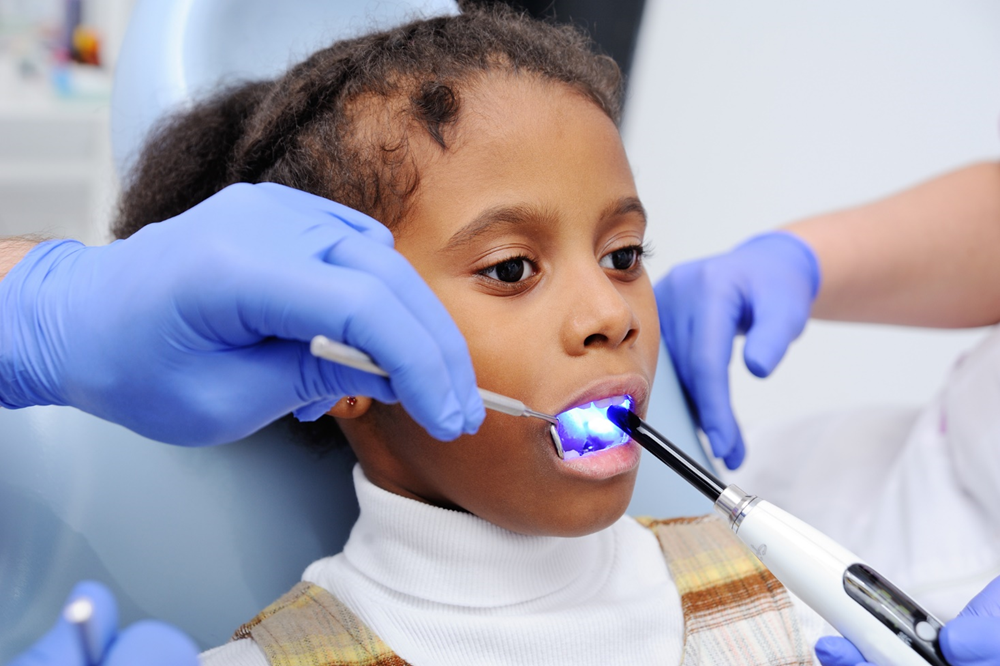
There’s a moment every parent recognizes. Your child’s dentist says the word “cavity,” and your kid’s eyes go wide. They’re not worried about the filling itself. They’re worried about the needle. For a lot of children, the fear of that injection is worse than anything else about the dental visit, and it can create anxiety that follows them into adulthood. At All Smiles Dental in Burley, Dr. Rice has been fixing cavities in kids without needles, and the difference it makes in how children experience dental care is hard to overstate.
Parents across the Magic Valley are often surprised to learn this is even an option. Most of us grew up assuming that a filling meant a shot of novocaine, a numb lip, and the strange sensation of not being able to feel half your face for a few hours afterward. For an adult, that’s manageable. For a five-year-old, it can be the thing that turns every future dental appointment into a battle.
So how does a dentist fill a cavity without an injection? And does it actually work? Those are fair questions, and the answers matter if you’re trying to set your child up for a healthy relationship with dental care.
How Needle-Free Cavity Treatment Works
The technology behind needle-free fillings at All Smiles Dental is the WaterLase® laser system. Instead of using a traditional drill to remove decay, the WaterLase® uses laser energy combined with a gentle water spray. The laser precisely removes the decayed portion of the tooth while the water keeps the area cool and comfortable.
What makes this relevant to needles is that the laser works differently than a drill at a sensory level. A conventional dental drill generates heat and vibration as it cuts through tooth structure. That heat and vibration stimulate the nerve inside the tooth, which is why local anesthesia is necessary to keep the patient comfortable. The WaterLase® doesn’t produce the same kind of thermal or mechanical stress. For many cavities, especially the small to moderate ones commonly found in children, the laser can remove decay without triggering enough nerve response to require an injection.
That’s not a theoretical claim. Parents who’ve seen it firsthand at All Smiles Dental consistently mention it in their reviews, often with some version of “I couldn’t believe my child sat through a filling without a single tear.”
It’s worth being clear about the limits, too. Not every cavity can be treated this way. Very deep cavities that extend close to the nerve, or teeth with extensive decay, may still require local anesthesia for the child’s comfort. Dr. Rice evaluates each situation individually and is upfront with parents about what to expect before any work begins.
Why the Needle Is the Biggest Barrier for Kids
Pediatric dental anxiety is well studied, and needle fear ranks at or near the top of every survey on the subject. A 2019 review published in the International Journal of Paediatric Dentistry found that fear of injections was one of the strongest predictors of dental anxiety in children and adolescents. That anxiety doesn’t just make appointments unpleasant. It leads to avoidance, which leads to untreated decay, which leads to more invasive treatment down the road.
The pattern plays out in dental offices every day. A child needs a small filling. The parent postpones because the last appointment was traumatic. By the time they come back, the cavity has grown, and now the procedure is longer, more involved, and harder on everyone. Removing the needle from the equation for routine fillings disrupts that cycle at its starting point.
There’s also a practical consideration that parents of young children understand well: the post-injection numbness. Kids who leave the dentist with a numb lip or cheek frequently bite or chew on the tissue without realizing it, sometimes causing sores or injuries that take days to heal. When anesthesia isn’t needed, that risk disappears entirely.
What Your Child’s Visit Looks Like at All Smiles Dental
If your child has a cavity that’s a good candidate for laser treatment, the appointment itself tends to be quicker and calmer than a traditional filling visit.
Dr. Rice starts by showing the child the WaterLase® handpiece and explaining what it does in age-appropriate terms. There’s no high-pitched drill sound. The laser produces a popping or tapping noise along with a light mist of water, which most kids find far less intimidating than the whine of a conventional handpiece.
Once the decayed area is prepared, Dr. Rice places the filling material the same way he would after any cavity preparation. The tooth is restored, and the child is done. Many parents are caught off guard by how fast it goes. Without the time needed to administer and wait for anesthesia to take effect, the entire visit can be noticeably shorter.
After the appointment, your child can eat and drink normally right away. There’s no numbness to wait out, no drooling, and no risk of accidentally biting their cheek at lunch. For parents trying to fit a dental visit into a school day, that matters.
Is It Right for Every Child?
Dr. Rice doesn’t treat the WaterLase® as a one-size-fits-all solution. Some children have cavities in locations or of a size where traditional preparation makes more sense. Occasionally, a child may still be anxious enough that sedation or local anesthesia is the better choice for their comfort. The goal is always to match the approach to the individual child, not to force a technology into a situation where it isn’t the best fit.
For children with special needs or sensory sensitivities, the reduced noise and vibration of laser treatment can be a meaningful advantage even beyond the needle-free aspect. Several families in the Burley area have sought out All Smiles Dental specifically for this reason.
Building a Better Relationship With the Dentist
The long game here isn’t just about one painless filling. It’s about what that experience teaches a child about dental care. Kids who have a calm, comfortable visit are more likely to cooperate at future appointments, more likely to let a hygienist clean their teeth without resistance, and more likely to grow into adults who keep up with preventive care instead of avoiding the dentist until something hurts.
That’s the part of this conversation that doesn’t get enough attention. The filling fixes the cavity. The experience shapes the habit.
If your child has a cavity that needs attention, or if you’ve been putting off a visit because you know it’ll be a struggle, a consultation at All Smiles Dental is a good starting point. Dr. Rice can take a look, talk through the options with you, and give you an honest assessment of whether needle-free treatment is right for your child’s situation. You can call the Burley office or [book online] to set up a visit.